
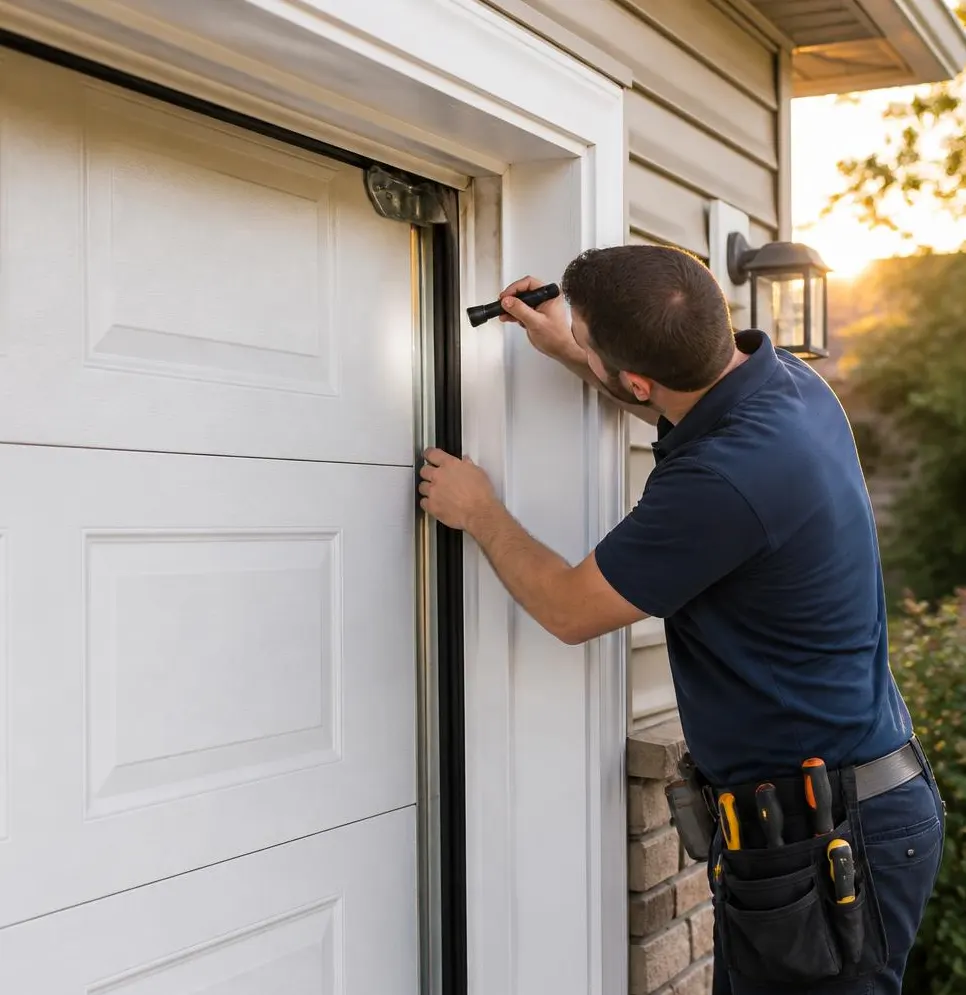
What a Technician Sees on a Typical Call
The call usually starts the same way: one spouse thinks the brownish spots near the bottom of the door are "just rust, no big deal," and the other is convinced the whole door is about to fall apart. When we show up, the door is often somewhere in between. There's surface rust along the bottom panel where water pools after storms, a little bubbling paint near the hinges, and maybe a door that doesn't sit quite flush in the track anymore. Sometimes it's nothing but cosmetic wear. Sometimes it's a hardware problem waiting to become a safety problem. The only way to know for sure is to look at where the moisture is hitting and what it's touching.
Why Odessa Homes See This More Than Most
Humidity sits heavy here most of the year, and the afternoon downpours during storm season send water straight at garage doors that face the street or the driveway. That water doesn't just evaporate — it collects in the bottom seal, runs along the track, and sits in the hinge joints and panel seams. Add salt-laden air if you're closer to the coast, and metal hardware corrodes faster than it would in a drier climate. None of this is unusual for the area. It's just what garage doors deal with here, year after year, and it's worth understanding instead of guessing.
Rust: Cosmetic vs. Structural
Rust on a steel garage door isn't automatically a crisis, but it isn't always harmless either. Here's the honest breakdown:
- Surface rust on paint: Small orange spots on the painted surface, especially near the bottom panel, are usually just the paint layer failing where water sits longest. This is cosmetic and can be sanded, treated, and repainted.
- Rust on hinges, rollers, or the track: This is a different story. Rust here increases friction, which strains the opener motor and can cause the door to bind or jump the track. It's a maintenance issue, not an emergency, but it shouldn't sit for months.
- Rust on the springs or cables: This is the one to take seriously. Springs and cables hold enormous tension, and corrosion weakens the metal from the inside, not just the surface. A rusted spring can snap without warning. If you see flaking or pitting rust on either, that's a call-a-professional situation, not a wire-brush-it-yourself one.
Swelling: Usually a Wood or Composite Door Problem
If the argument is actually about a door that looks fine but won't close right, swelling is the more likely culprit. Wood and wood-composite garage doors absorb moisture from humidity and rain, and the panels expand slightly. You'll notice it as:
- A door that drags or sticks partway down, even though the opener seems to be working fine.
- Panels that look slightly warped or bowed when you step back and look at the door straight on.
- Gaps that open and close seasonally as the wood expands and contracts with humidity levels.
Steel doors with a wood-look finish are less prone to this than solid wood, but the composite core can still swell if water gets behind damaged weatherstripping or a cracked seal. Either way, swelling is a moisture-intrusion problem, not just an aesthetic one — left alone, it can warp panels permanently and throw the door off balance.
How to Tell Which One You're Dealing With
Before you settle the argument with a guess, do a two-minute walk-around:
- Close the door fully and check the bottom seal. If it's cracked, curled, or missing sections, water is getting underneath it and causing both rust and swelling.
- Run your hand along the hinges and track for rough, flaky texture — that's active rust, not just surface discoloration.
- Open and close the door slowly and listen for grinding or watch for hesitation. That's friction from corrosion, not a cosmetic issue.
- Look at the door from the side in daylight. Visible bowing or waviness in a panel means moisture has already gotten into the material.
If it's limited to painted surface spots, you've got time and options. If it's in the hardware, springs, cables, or the panel shape itself, it's worth having someone look at it before hurricane season wind loads put extra stress on a door that's already compromised.
When to Call Odessa Garage Door Repair
If you're seeing rust on springs, cables, or the track — or a panel that's visibly swelling or dragging — that's when to call us instead of debating it further. We'll inspect the hardware for corrosion damage, check whether the door is still rated to handle wind load properly, and recommend Garage Door Panel Replacement only where it's actually needed rather than replacing the whole door. If the issue is rust-seized rollers or hinges causing strain on the system, our Garage Door Tune-Up & Maintenance service cleans out corrosion, replaces worn hardware, and gets the door moving smoothly again before it becomes a bigger repair.
If something about your garage door has you and your spouse going back and forth, let us settle it for you. Call Odessa Garage Door Repair for an honest inspection anywhere in Odessa, FL and the surrounding Pasco County area.